
Vegetables
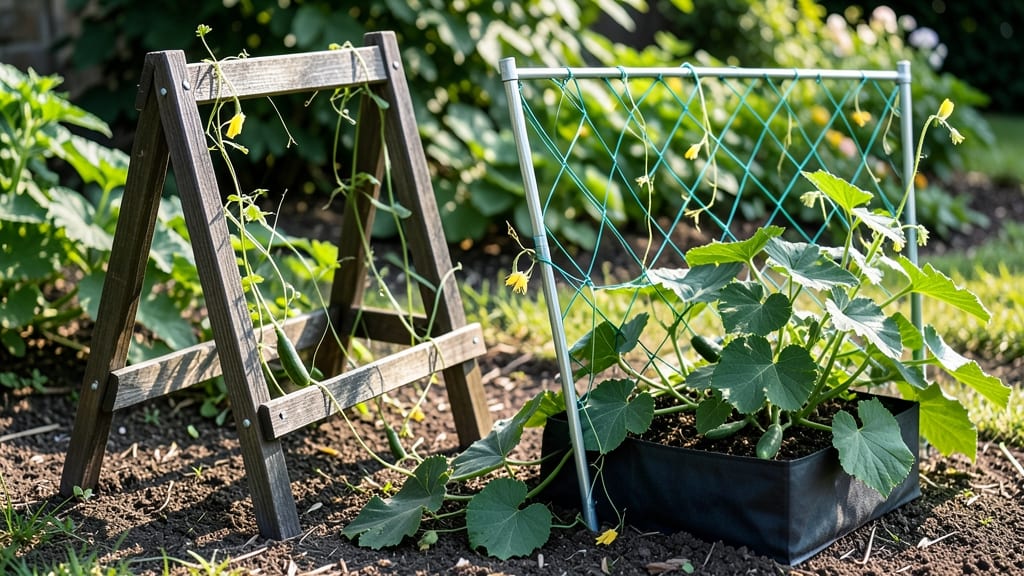
An A-frame cucumber trellis turns chaotic vines into a neat, productive vertical garden that saves space and cuts down on pests. 🌱 I built mine last spring after watching my sprawling cucumbers take over the yard—and it changed everything.
Now my plants grow straight up, fruits stay cleaner, and I harvest more than ever before.
The beauty of this design is how simple it is: just two sturdy posts, a few cross braces, and some netting or twine. You can adjust the height to fit your space, and the open frame lets air circulate so vines stay healthy.
Even my black thumb can’t kill these setups anymore—they’re that foolproof.
By the time summer peaks, you’ll have vines climbing 6-8 feet high, cucumbers hanging within easy reach, and a garden bed free for other plants. The trellis also keeps fruits off the ground, so they stay crisp and pest-free longer.
No more digging through tangled vines to find a single ripe cucumber!
Works for bush varieties too, though vining types like 'Straight Eight' or 'Marketmore' really shine on these frames. Let’s get yours built—your future harvests will thank you.
📚 In This Guide
- What you need
- Instructions
- Tips and common mistakes
- Wrapping up and next steps
What you need
- ● 2x4 lumber: 4 pieces (each 8 feet long)
- ● 1x4 lumber: 4 pieces (each 6 feet long, for cross braces)
- ● Galvanized screws: 2-inch (for framing) and 1.5-inch (for cross braces) – about 50 total
- ● Twine or jute twine: 1 spool (200+ feet, for cucumber support)
- ● Post anchors or heavy-duty stakes: 4 (to secure the base)
- ○ Non-toxic wood sealant or paint: (optional but recommended for longevity)
- ● Drill/driver with screw bits
- ● Tape measure
- ● Saw (hand saw or circular saw)
- ● Level (to ensure your trellis stands straight!)
- ● Pencil (for marking cuts)
- ○ Staple gun (optional, for securing twine)
- ● Sunny spot in your garden or patio (6+ hours of sunlight daily)
- ● Well-draining soil (amend with compost if needed)
- ● Cucumber seeds or seedlings (vining varieties like ‘Straight Eight’ or ‘Marketmore’ work best)
- ● Gloves and safety glasses (for handling tools)
Step-by-Step instructions for building an a-frame cucumber trellis
Here's how to create a sturdy, space-saving trellis that'll keep your cucumbers climbing and your harvests thriving.
🪴 Step 1: Gather Materials and Measure Your Space
You'll need two 8-foot wooden stakes (2x2 or 2x3 lumber works best), four 3-foot wooden slats (2x4 or 2x6), galvanized screws (2-1/2 inches), and a measuring tape. Check your growing area—this trellis needs at least 4 feet of vertical space and 3 feet of ground clearance for cucumber vines to sprawl. I like to place mine near the garden's edge so vines can cascade slightly over the side.
Mark the center of each 8-foot stake with a pencil. These will be your attachment points for the crossbars. If you're building for multiple plants, space trellises 3 feet apart to allow airflow and easy harvesting. Measure twice before cutting or drilling—mistakes here mean wasted materials and wobbly structures later.
✂️ Step 2: Assemble the A-Frame Structure
Stand the two stakes upright where you marked their centers, about 3 feet apart. Use a helper to hold them steady while you attach the first 3-foot slat horizontally between the top of each stake. Pre-drill holes to prevent splitting, then secure with two screws per end. This creates the top crossbar of your A-frame.
Next, attach the second 3-foot slat about 6 inches below the first one, creating a second horizontal support. This gives cucumber vines multiple points to grip as they grow. For extra stability, add a diagonal brace from the bottom of each stake to the midpoint of the lower crossbar. This prevents the frame from leaning over when vines get heavy.
🌿 Step 3: Secure Vertical Supports for Vine Guidance
Cut two additional 3-foot stakes (or use leftover lumber) and attach them vertically between the top and bottom crossbars, about 1 foot from each side stake. These create a four-post structure that gives vines something to cling to as they grow upward. Space them evenly—uneven spacing leads to vines bunching on one side and leaving the other bare.
Wrap the vertical stakes with twine or soft garden twine in a spiral pattern, starting at the bottom. This provides instant grip for cucumber tendrils. Leave about 6 inches of space between wraps so vines can weave through naturally. I like to use natural jute twine because it blends into the garden and won't irritate the plants as they climb.
☀️ Step 4: Plant and Train Cucumbers for Maximum Growth
Plant cucumber seeds or seedlings 6 inches away from the trellis base, about 1 foot from the front stake. This gives vines room to spread before climbing. Water deeply after planting to encourage strong root growth—roots need to establish before they can support heavy vines. Wait until vines reach 6-8 inches tall before gently weaving them onto the twine.
As vines grow, guide them upward in a counterclockwise spiral around the trellis. This prevents tangling and ensures even distribution of weight. Watch for tendrils—those little curly growths that grab onto surfaces. When you see them, gently wrap them around the twine. If a vine gets too heavy on one side, redistribute it evenly—this keeps the trellis from tipping.
💧 Step 5: Maintain and Harvest for Bountiful Results
Water at the base of the trellis (not overhead) to keep leaves dry and prevent disease. Cucumbers need 1-2 inches of water weekly, but check soil moisture—if the top 2 inches feel dry, it's time to water. Mulch around the base with straw or shredded leaves to retain moisture and suppress weeds. This also keeps vines from rotting if they brush against damp soil.
Harvest cucumbers when they reach full size but before they turn yellow or develop soft spots. Pick regularly to encourage more production—overripe cucumbers weigh down vines and can break the trellis. If vines start to sag by late summer, add a third crossbar about halfway up for extra support. By season's end, you'll have a trellis that's held up to 20 pounds of cucumbers without so much as a wobble.
Tips & tricks for building a sturdy a-frame cucumber trellis
Real talk: A well-built trellis isn't just about saving space—it's about creating a supportive home for your cucumbers that'll last all season. Here's what I've learned from years of trial and error in the garden.
Material Selection Matters: While 2x2 or 2x3 lumber works perfectly for the stakes, don't skimp on the crossbars. The 2x4 or 2x6 slats should be pressure-treated or cedar to resist rot. I've seen untreated pine slats fail after just a few weeks of summer rains. If you're using leftover lumber, check for straightness—warped slats will create uneven gaps that make training vines frustrating.
The Diagonal Brace Game-Changer: That extra diagonal brace in Step 2 isn't just for show—it's what prevents your trellis from leaning like a drunk sailor when cucumbers get heavy. I've seen trellises collapse under 10 pounds of cucumbers without it. Use the same 2-1/2 inch screws you used for the crossbars to attach the brace, and position it from the bottom of each stake to the midpoint of the lower crossbar. This creates a triangle that distributes weight perfectly.
Twine Technique for Happy Vines: When wrapping the vertical stakes with twine in Step 3, here's a pro move: start your spiral at the bottom and work your way up, leaving those 6-inch gaps between wraps. The key is tension—wrap just tight enough that cucumber tendrils can grab onto it, but not so tight that it cuts into the vines. Natural jute twine is my go-to because it's biodegradable and won't strangle your plants as they grow. I've also found that wrapping the twine clockwise on one stake and counterclockwise on the other creates a natural spiral for the vines to follow.
Space Planning for Success: Before you even break out the tools, measure your growing area carefully. That 3-foot spacing between trellises isn't arbitrary—it's what allows for proper airflow, which prevents fungal diseases like powdery mildew. And that 6-inch planting distance from the trellis base gives your cucumbers room to establish before they start climbing. I've learned this the hard way after seeing vines struggle when planted too close to the structure. Trust me, your cucumbers will thank you for the extra real estate.
Pro Tips for A Frame Cucumber Trellis
- Real talk: A well-built trellis isn't just about saving space—it's about creating a supportive home for your cucumber...
- Material Selection Matters: While 2x2 or 2x3 lumber works perfectly for the stakes, don't skimp on the crossbars. The...
- The Diagonal Brace Game-Changer: That extra diagonal brace in Step 2 isn't just for show—it's what prevents your trel...
Frequently asked questions
Why should I use an A-frame trellis instead of a regular one?
An A-frame trellis is perfect for small spaces! Its triangular design saves space while providing superior support for cucumbers. Unlike flat trellises, it distributes weight evenly, reducing breakage. Plus, it’s easier to build and customize for your garden layout. Pro tip: Rotate the frame occasionally to ensure even sunlight exposure.
How tall should my A-frame trellis be for cucumbers?
Aim for 6–8 feet tall—this gives cucumbers enough room to climb and vine. If your variety is sprawling (like 'Straight Eight'), opt for the taller end. For bushier types (like 'Bush Champion'), 5–6 feet works well. Remember: Leave at least 18–24 inches of space around the base for airflow and easy harvesting.
When is the best time to set up my trellis?
Install your A-frame trellis 2–3 weeks before planting cucumbers. This gives vines time to latch onto the netting or twine. If retrofitting, set it up as soon as seedlings are 6–8 inches tall and gently weave them onto the trellis. Warning: Avoid placing it too late—cucumbers grow fast, and unsupported vines can flop!
What if my cucumbers aren’t climbing the trellis?
Cucumbers need encouragement! If they’re not climbing, try:
- Gently tie vines to the trellis with soft twine or plant ties.
- Check for pests (like cucumber beetles) damaging new growth.
- Ensure the trellis is stable—wobbly frames deter vines.
- Provide morning sunlight to dry dew, which can weigh down vines.
Can I use an A-frame trellis for other vegetables besides cucumbers?
While designed for cucumbers, A-frame trellises work great for:
- Pole beans (use a shorter frame, 4–5 feet).
- Peas (add netting for extra support).
- Squash or melons (heavier varieties may need wider bases).
- Tomatoes (use a sturdier frame or add crossbars).
Wrapping up and next steps
Building an A-frame cucumber trellis is a game-changer for small gardens—maximizing space while yielding healthy, high-quality cucumbers with minimal effort. Whether you’re a beginner or a seasoned gardener, this project is simple, cost-effective, and rewarding. 🌱
Ready to transform your garden? Start by gathering your materials, follow the step-by-step guide, and watch your cucumbers thrive vertically. Next up: Plant your seeds, water regularly, and enjoy the satisfaction of a thriving, space-saving harvest! 🌿